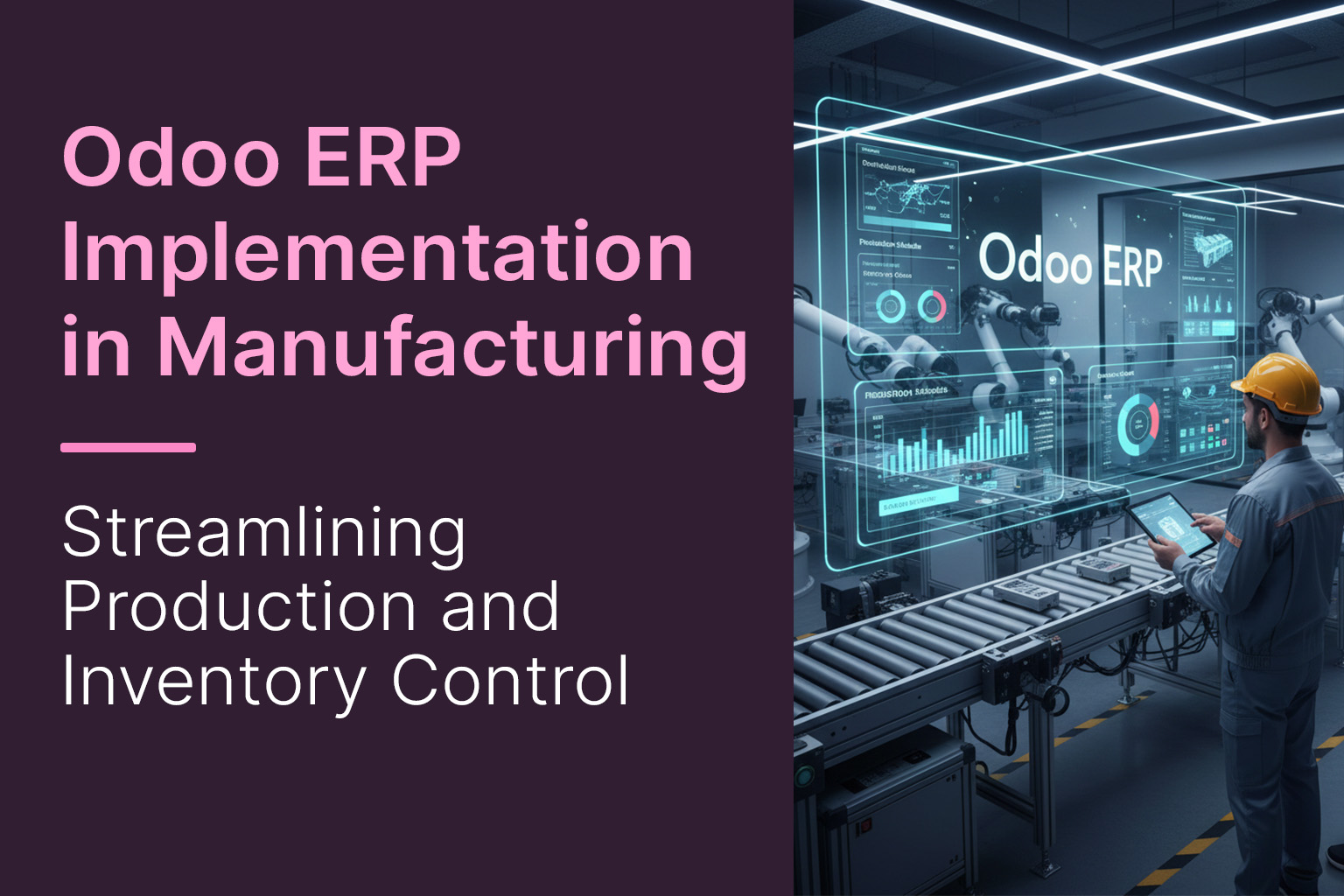
Manufacturers deal with constant pressure—tight deadlines, changing demand, shifting material availability, and the need for accurate planning. When production depends on disconnected systems or manual tracking, even a minor delay can impact the entire workflow. Many companies eventually reach a point where they realize that spreadsheets and isolated tools cannot support their scale anymore. This is where Odoo ERP Implementation in manufacturing proves its value.
Odoo has become one of the most preferred solutions for factory operations because it connects every part of the business into a single system. From planning and scheduling to inventory, quality checks, and delivery, Odoo helps teams work with clarity and precision. For companies looking to streamline production and gain tighter control over stock movement, Odoo delivers both structure and flexibility.
Why Manufacturers Are Moving Toward Odoo ERP
Manufacturing operations are complex. Each department depends on information from another. If sales forecasts are inaccurate, production suffers. If inventory records are outdated, planning becomes guesswork. If quality checks are missed, the entire workflow slows down.
Traditional ERP systems often fail to support modern manufacturing needs because they are expensive, rigid, and slow to change. Odoo for the manufacturing industry removes many of these barriers. It offers a modular design, allowing companies to adopt only what they need and add more features as they grow. The system supports both discrete and process manufacturing, which makes it suitable for factories across automotive, consumer goods, electronics, textiles, and food production.
Stronger Production Planning With Real-Time Visibility
Production planning sits at the heart of every manufacturing operation. Without accurate planning, teams either overproduce or miss deadlines. Odoo’s planning tools help companies schedule work orders, track progress on the shop floor, and allocate resources efficiently.
A growing consumer goods manufacturer shared that they had difficulty aligning raw material availability with production orders. After moving to Odoo manufacturing ERP, the planning team could see material status, production stages, and work center capacity in real time. This helped them reduce the number of delayed batches and streamline their order cycle.
Manufacturers appreciate this visibility because it allows them to respond faster to market changes, unexpected downtime, or urgent customer requests.
Better Control Over Inventory and Material Movement
Inventory issues cause some of the biggest challenges in manufacturing—missing materials, inaccurate counts, slow replenishment, or overstocking. Odoo offers a highly structured inventory module that integrates directly with production, purchasing, and sales.
This connection ensures that every material movement is recorded the moment it happens. Teams can track stock in multiple warehouses, monitor incoming shipments, set automated reorder rules, and manage material consumption during production.
One electronics manufacturer said that before adopting Odoo, they often faced stock mismatches between what the system showed and what was physically available. After implementing Odoo production management, material tracking became more accurate because every component issued to production was logged instantly. This improved forecast accuracy and reduced waste.
Seamless Coordination Across Departments
Manufacturing workflows depend on collaboration between departments—production, quality, procurement, sales, and logistics. When these units operate on separate tools, miscommunication becomes unavoidable.
Odoo brings everyone onto the same platform, ensuring consistent information across the organization. Purchase teams can see production schedules before ordering materials. Sales teams know the production status before promising delivery dates. Quality teams receive automated alerts when a batch is ready for inspection.
This flow of information keeps operations aligned and reduces the friction that often slows down manufacturing companies.
Built-In Quality Control for More Reliable Output
Quality issues can derail production and lead to customer dissatisfaction. Odoo includes flexible quality control checkpoints that allow manufacturers to define when inspections take place. These checkpoints can be set at different stages—during receipt of materials, mid-production, or before final packaging.
For example, a packaging company added automated quality checks in Odoo to ensure that every batch met size and strength requirements. If a batch failed inspection, the system moved it into a separate workflow for correction. This helped them maintain consistent product quality without slowing down operations.
Stronger Traceability and Compliance
Many industries require detailed records of production batches, material origins, and inspection results. Odoo supports complete traceability through lot numbers and serial tracking. This is especially beneficial for food processing, chemical manufacturing, and medical products.
Traceability becomes simple because every component, work order, and quality check is linked inside the system. If a defect is reported, teams can trace the issue back to its source within minutes. This not only reduces risk but also strengthens compliance.
Automation That Reduces Manual Effort
Repetitive manual work drains time and increases the risk of errors. Odoo helps reduce these issues through automation. Work orders can be triggered automatically when a sales order arrives. Purchase orders can be created when stock hits a minimum level. Production updates can be logged without manual entry using barcode scanners or IoT integrations.
This automation improves process consistency and frees teams to focus on higher-value tasks.
Support for Future Growth and Customization
Every manufacturing company evolves. Production lines expand, new products are introduced, and workflows change. Odoo’s modular structure helps businesses scale without rebuilding their entire system.
Through Odoo Development Services, manufacturers can customize workflows, add new modules, or integrate specialized machinery. This adaptability makes Odoo a long-term solution for growing operations.
Conclusion
Manufacturers need systems that can support daily operations while also preparing them for future challenges. Odoo ERP implementation in manufacturing offers this balance by combining flexibility, automation, visibility, and strong control over production and inventory.
Whether a company is struggling with planning delays, stock mismatches, disconnected workflows, or quality inconsistencies, Odoo brings everything into a coordinated structure. As teams gain real-time insights and automate routine tasks, production becomes more predictable and efficient.
For organizations planning to modernize their factory operations, Odoo for the manufacturing industry is one of the strongest options available. With the right implementation and ongoing support, manufacturers can streamline processes, reduce errors, and build a more scalable production environment.
Leave a Reply